Understanding Different Types of Seat Belts
Most confusion about seat belt types comes from mixing two separate questions into one. Separate them and the whole subject becomes straightforward.
Two axes, not one list
Ask what type of seat belt a vehicle has and you will usually get one of three words back: three-point, lap, or retractable. Presented as a list of three, they look like alternatives. They are not. Two of them describe the geometry of the assembly and one describes how its webbing length is managed.
Put them on two axes instead and the confusion disappears:
- Geometry — how many points the assembly attaches at, and whether webbing crosses the torso. This is where three-point and lap belong.
- Webbing management — whether length is set automatically or by hand. This is where retractable belongs, alongside manually adjusted arrangements.
A single assembly can be three-point and retractable at the same time. It cannot be three-point and lap at the same time.
The geometry axis
Three-point arrangements
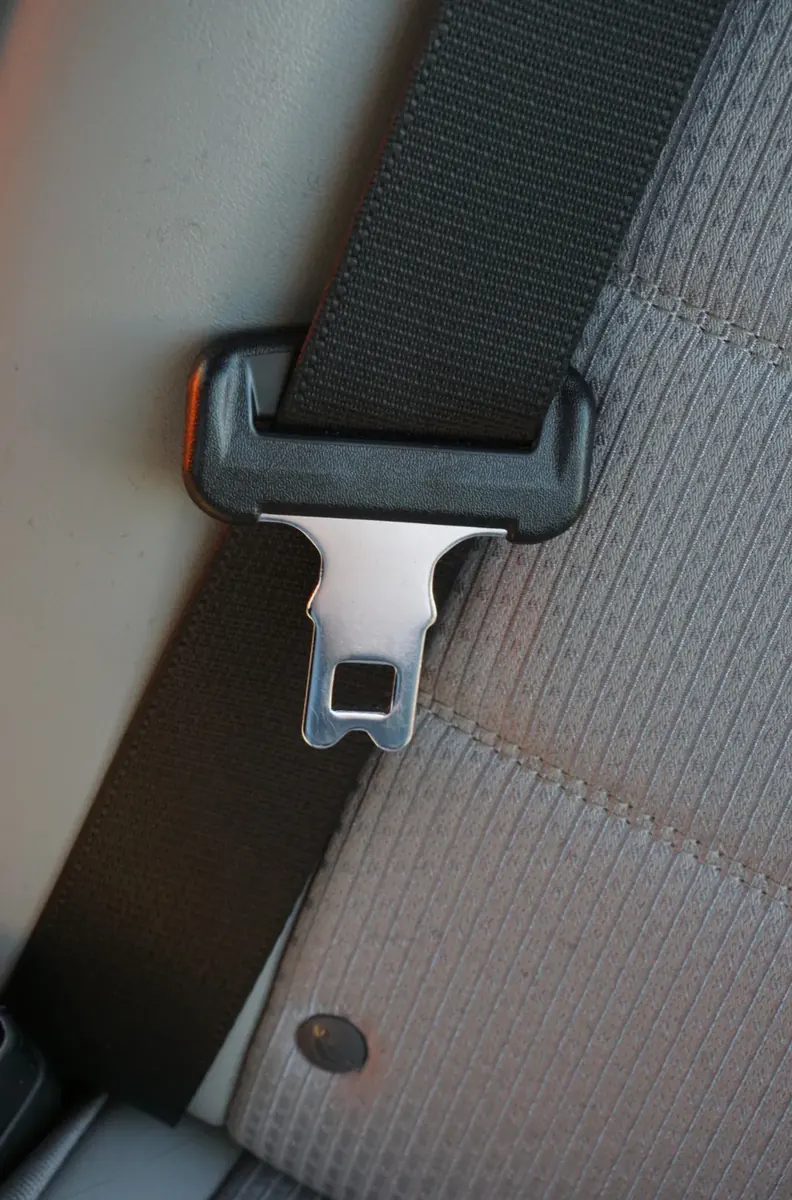
A three-point belt has two working sections sharing one buckle engagement. The lap section crosses the pelvis; the diagonal section runs from an upper anchorage behind the shoulder, across the chest and over the collarbone region. Three attachment points hold it: upper anchorage, buckle mount, outboard anchorage.
The diagonal section is the point of the design. Without it, the pelvis is restrained but the upper body is free to pivot forward about the hips. That is the difference that makes three-point and lap arrangements genuinely different products rather than variants.
Lap arrangements
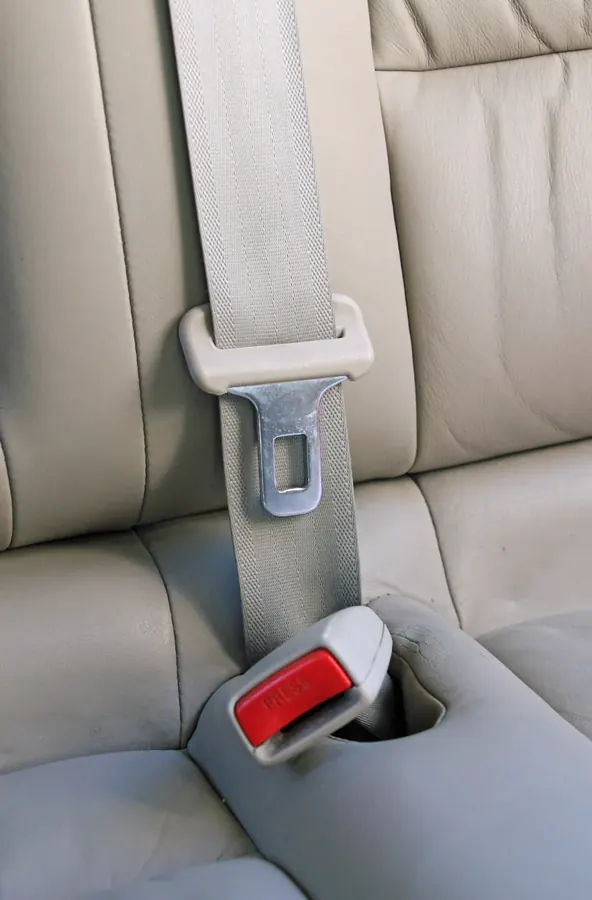
A lap belt is a two-point assembly: one length of webbing across the pelvis, anchored either side of the position, with no upper anchorage and no diagonal section. It is typically found at rear centre positions, at some bench positions in commercial vehicles, and in vehicles originally specified that way.
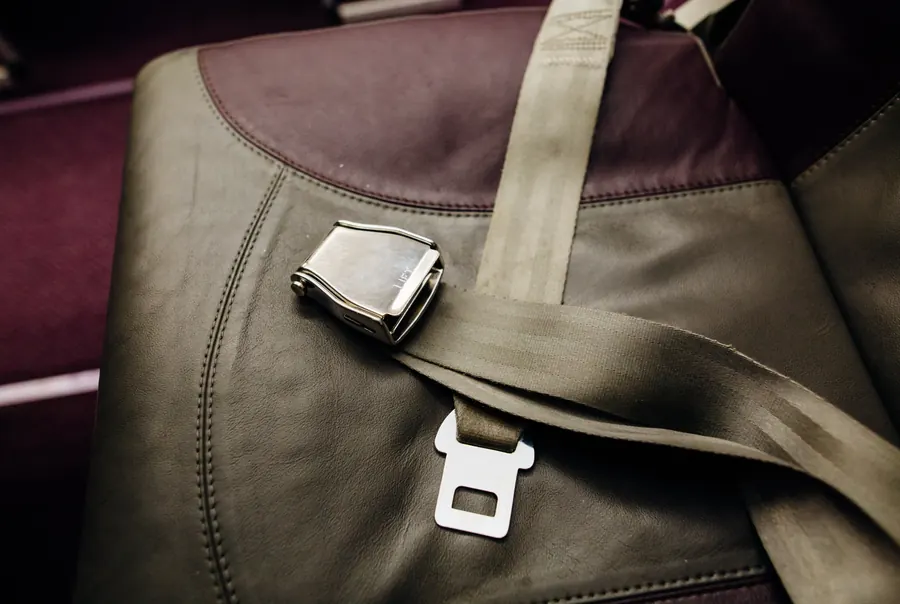
Which arrangement a position uses is determined by the anchorages actually present at that position. It is not a preference, and it is not inferred from what the seat next to it has.
The management axis
Retractable
A retractable assembly stores webbing on a spool inside a retractor housing. Webbing pays out as the occupant draws the belt across and returns when released, so the belt sits close to the body without anyone setting a length. This is the arrangement in most modern vehicles.
Because the retractor is a physical unit that needs somewhere to mount in a particular orientation, its mounting arrangement is a compatibility factor in its own right — separate from the anchorage points that the belt geometry requires.
Manually adjusted
The alternative is an adjuster on the webbing that the occupant slides to set length. Nothing returns the webbing when the belt is released. This makes correct adjustment part of correct use: a manually adjusted belt left slack is not doing what it was designed to do.
How the combinations work out
| Combination | What it means in practice |
|---|---|
| Three-point, retractable | The common modern arrangement at outboard positions. Lap and diagonal sections, automatic webbing return. |
| Three-point, manual | Lap and diagonal sections with length set by an adjuster. Found in older specifications and some special applications. |
| Lap, manual | The typical lap arrangement: two points, adjuster on the webbing. |
| Lap, retractable | Less common, but it exists. A two-point arrangement fed by a retractor. |
Identifying what you have
Four observations at the seating position settle it, and none of them require tools.
- Does the webbing cross the chest as well as the lap? Yes means a three-point arrangement; no means a lap arrangement.
- Release the belt — does the webbing pull itself back in? Yes means retractable.
- Is there an adjuster on the webbing you slide to set length? Yes means manually adjusted.
- Which side of the cabin is the position on? Not a type question, but it will be the next thing anybody asks, because assemblies are handed.
The one-line answer we are hoping for
“Rear left position, three-point, retracts automatically, buckle side is the part that has failed.” That single sentence does more work than a paragraph of vehicle description.
Why the distinction matters commercially
Because the wrong axis leads to the wrong catalogue page. Someone who needs a retractor-fed assembly and asks for “a three-point belt” may be offered a manually adjusted three-point arrangement that will not suit the position. Someone who asks for “a retractable belt” without stating geometry leaves the most important question unanswered.
State both, and the enquiry lands in the right place immediately. Our product pages are organised on the same basis: three-point and lap for geometry, retractable for webbing management, plus car seat belts as the general passenger-vehicle group.