Vehicle Safety and Occupant Restraint Basics
A seat belt is not a standalone product that happens to be installed in a car. It is one part of a system, and almost everything practical about seat belt supply follows from that.
Restraint is a system
The phrase “occupant restraint system” is more accurate than “seat belt”, and the extra word does real work. A belt on its own restrains nothing. What restrains an occupant is a belt, joined to anchorages, joined to vehicle structure — with the seat and its mountings involved as well.
Every element in that chain has to hold. Which is why a discussion about a replacement belt keeps turning into a discussion about anchorage hardware, mounting arrangements and handing: those are not peripheral details, they are the parts of the system the belt depends on.

The load path
Think about where load goes. An occupant decelerating with the vehicle presses into the webbing. The webbing carries that load along its length to its attachment points. Those points transfer it into structure designed to accept it.
Two things follow immediately. First, the geometry of how webbing meets the body determines which parts of the body take load — hence the emphasis on the lap section sitting low across the pelvis and the diagonal crossing the collarbone. Second, the integrity of the attachment points is not a secondary concern; it is part of the same load path.
A perfectly good belt fitted to a compromised anchorage is a compromised restraint. The chain has no strong links, only complete ones.
Three practical consequences
1. Compatibility is a safety question
Because the belt works through the vehicle, matching matters for reasons beyond convenience. Configuration, handing, mounting arrangement and latch geometry all determine whether the load path is the one the position was designed around. This is why we ask rather than assume, and why we do not publish blanket fitment claims.
2. Installation is not a fitting detail
Anchorage hardware carries occupant load. Fitting and torquing it correctly is skilled work, which is why we recommend that installation is carried out or verified by a qualified automotive technician — for a single replacement as much as for a non-standard installation.
3. Inspection covers more than the belt
An inspection that looks only at webbing has looked at part of the system. Buckle function, retractor behaviour and anchorage condition all belong in the same check.
Alongside other safety features
Modern vehicles have safety features that are designed to work with a properly worn belt rather than instead of one. The general principle worth understanding is that these systems are engineered as a set, with assumptions about occupant position built into them — and a correctly worn belt is what keeps an occupant in the position those assumptions describe.
We deliberately do not go further than that here. The specific behaviour of other safety systems in a given vehicle is a matter for that vehicle’s documentation and for a qualified technician, not for a supplier website. What we will say plainly is that we do not supply anything intended to bypass, disable or defeat any part of a vehicle safety system, including seat belt warning systems.
The occupant is part of it
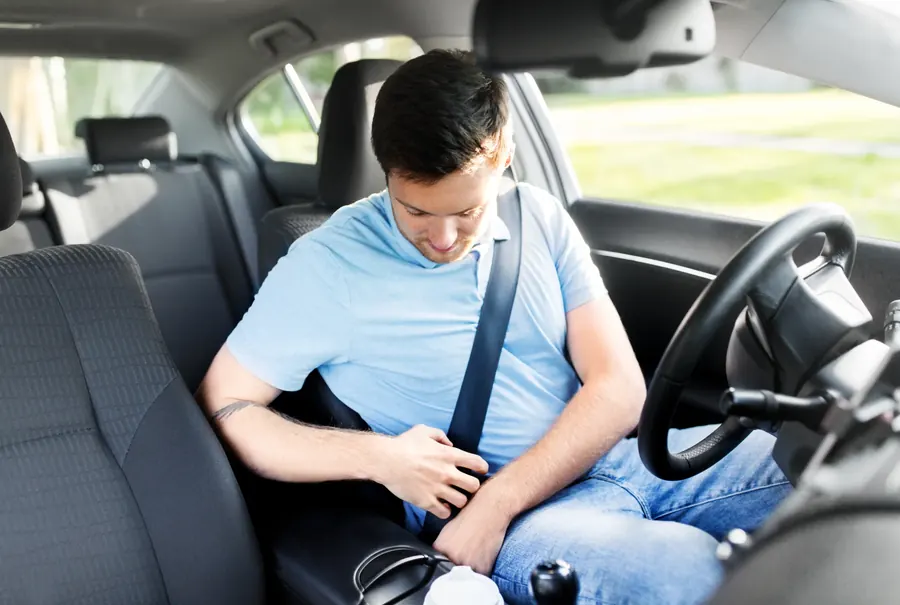
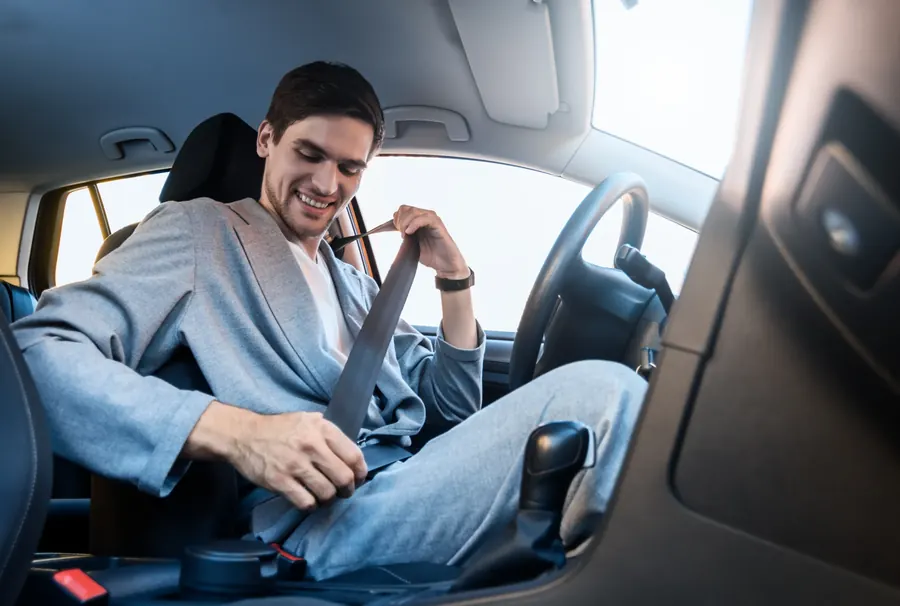
The final element in the system is the person using it. A belt that is not fastened restrains nothing. A belt routed under the arm or behind the back changes the load path. Slack has to be taken up before restraint begins, and a twist concentrates load along a narrow line instead of the full webbing width.
None of that is a criticism of users — it is an argument for treating correct wear as part of the product working, and for adjusting the upper anchorage height where a vehicle provides it. Our article on proper seat belt usage covers this in detail.
What this means for buying parts
If restraint is a system, then buying a restraint component is not like buying a consumable. The questions that matter are about correspondence: does this assembly serve the configuration the position requires, does it mount the way the position expects, and does its latch geometry correspond to whatever is staying in service?
That is the reasoning behind how this website is organised. Product pages are grouped by configuration and component rather than by vehicle. Specifications are published where they exist and left as enquiry items where they do not. And every product page ends up asking for the same handful of details, because those are the details the system actually depends on.
Start at the product catalogue, or read Choosing the Right Seat Belt for the selection sequence.