Seat Belt Inspection
This page is about knowing when to ask, not about diagnosing. A restraint system is examined properly at the vehicle by someone qualified to do it — everything below is about recognising when that is warranted.
What this page can and cannot do
It can help you recognise the observations that mean “have this looked at”. It cannot tell you whether a particular assembly is fit to stay in service, and neither can we from a photograph or a description. That assessment requires the assembly and its anchorages in front of someone qualified to judge them.
The distinction matters because a restraint component that is nearly right is not usefully different from one that is wrong. Where there is doubt, the answer is inspection.

Webbing observations
Webbing is the easiest part of an assembly to examine, and the part most likely to show something. Draw the belt out to its full length — slowly — and look along both faces.
- Cuts, nicks or tears anywhere along the length or at the edges
- Fraying, particularly along the edges or where webbing passes through a guide
- Deep abrasion, or a section that looks polished or thinned compared with the rest
- Chemical staining, or a patch that feels stiff, tacky or discoloured
- Signs of heat damage — hardening, glazing or melted fibres
- Mould, or a persistent damp smell after water ingress
Any of these is a reason to have the assembly inspected. None of them is a reason to trim, splice, wash aggressively or otherwise treat the webbing yourself.
Buckle and release observations
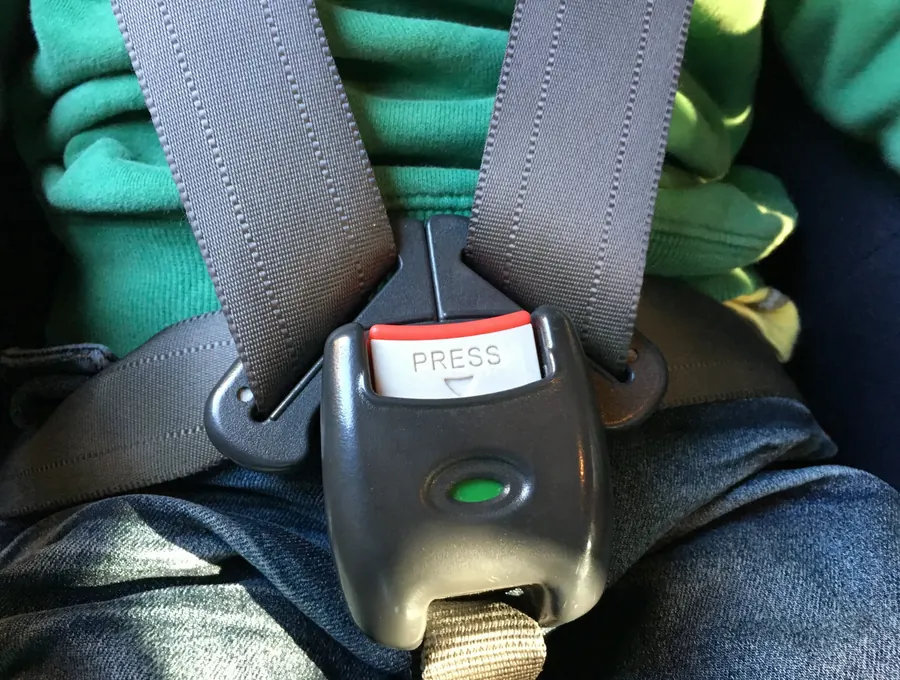
A buckle should accept the latch plate with a distinct, positive action, hold it securely, and release it only when the button is pressed deliberately. Anything less definite than that is worth reporting.
- Engagement that feels vague, or that only works in certain positions
- A latch plate that can be withdrawn without pressing the release
- A release that needs unusual force, sticks, or does not return
- Visible debris in the buckle throat — grit, crumbs, liquid residue
- Cracked or damaged buckle housing
Retractor observations
With a retractable assembly, the retractor is the part you cannot see, so it is judged entirely by behaviour.
- Webbing that does not return, or returns slowly and incompletely
- Webbing that will not extend smoothly, or binds partway out
- Unusual noise from the housing when the belt is drawn or released
- Webbing that emerges twisted every time despite being fed back flat
Do not open the housing
Retractor internals are under spring tension. Opening a housing is both unsafe and destructive to a component that a technician may otherwise be able to assess. Report the behaviour instead.
Events that warrant inspection
Some triggers are events rather than observations. After any of the following, arrange an inspection even if nothing looks or feels different.
- Any significant impact involving the vehicle
- Water ingress or flooding affecting the cabin
- Fire, heat exposure or a chemical spill in the vehicle
- Work carried out that involved removing or disturbing seats, trim or anchorages
- A vehicle returning to use after a long period standing

What never to attempt
- Repairing, splicing, sewing or shortening webbing
- Opening a retractor housing or a buckle mechanism
- Lubricating a buckle with general-purpose oils or sprays
- Using bleach, solvents or strong detergents on webbing
- Fitting anything that occupies a buckle to stop a warning system signalling
- Adding clips, pads or sleeves that change how webbing sits against the body
The last two deserve emphasis. A warning system that is signalling is doing its job; the response is to find out why, not to silence it. We do not supply products intended to defeat any part of a vehicle safety system.
What happens next
If a technician confirms that something needs replacing, you will have exactly what a product enquiry needs: the position, the configuration, and which components are involved. From there, Replacement Considerations covers what to check before ordering, and Replacement Seat Belt Solutions sets out the five photographs that make the enquiry straightforward.