Types of Seat Belts
Three terms do most of the work in this subject: three-point, lap, and retractable. Two of them describe geometry and one describes webbing management — which is why they are not alternatives to each other.
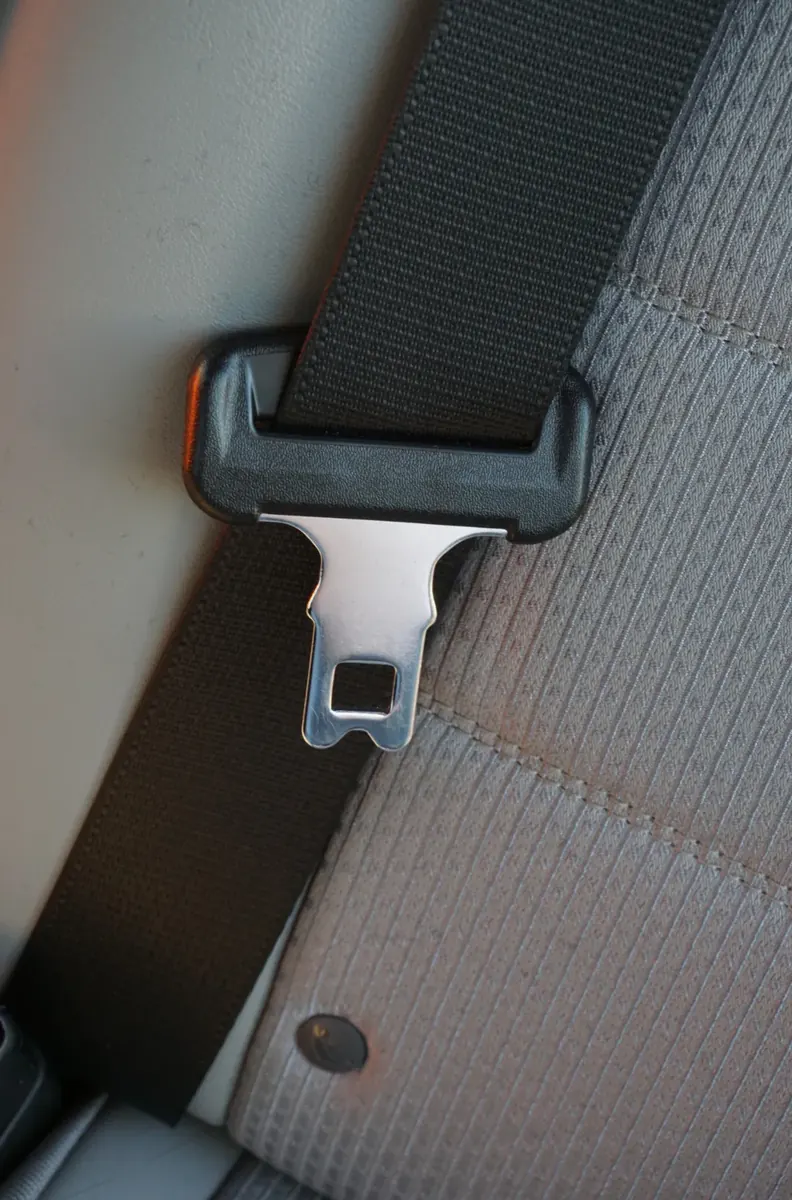
Two questions, not one
When people say “what type of seat belt is it?”, they are usually asking two questions at once. The first is about geometry: how many points does the assembly attach at, and does the webbing cross the torso? The second is about webbing management: does the belt retract on its own, or is its length set by hand?
Keeping those separate makes everything downstream easier. Three-point and lap answer the geometry question. Retractable answers the management question. A single assembly can be both three-point and retractable — most modern ones are.
Three-point and lap are alternatives to each other. Retractable is not an alternative to either — it is a separate property.
Three-point seat belts
A three-point belt has a lap section and a diagonal section sharing one buckle engagement, with three attachment points to the vehicle: an upper anchorage behind the shoulder, a buckle mount inboard of the seat base, and an outboard anchorage for the lap section.
The diagonal section is the defining feature. It restrains the upper body so the torso does not pivot forward about the hips. This is why a three-point assembly cannot be replaced with a lap belt at a position designed around it, and why the upper anchorage is not an optional part of the arrangement.
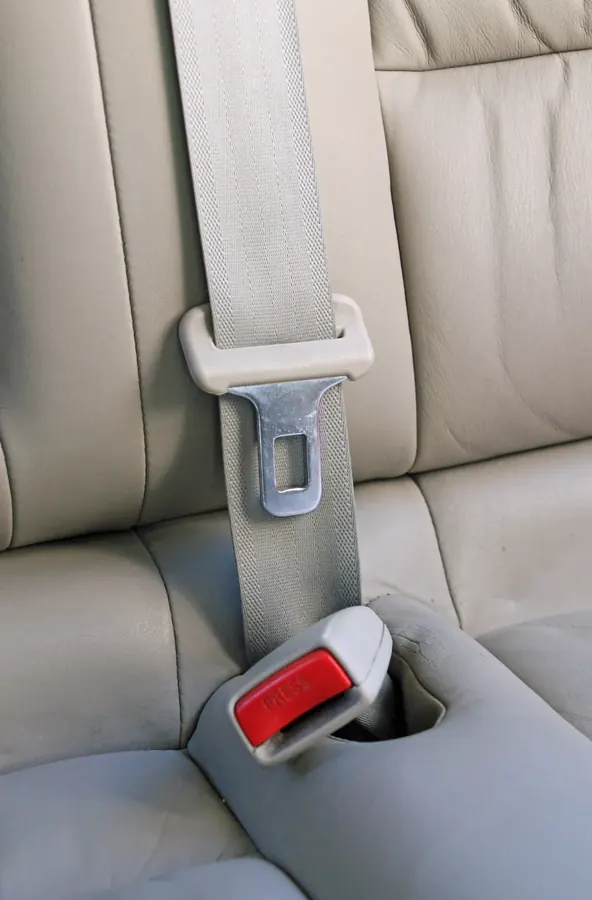
Three-point assemblies are handed: a left-side unit and a right-side unit mirror each other in upper anchorage position, buckle stalk and webbing exit direction. Handing is one of the first things to establish for any replacement.
Lap seat belts
A lap belt is a two-point arrangement. One length of webbing crosses the pelvis and attaches either side of the seating position. There is no upper anchorage and no diagonal section, so the upper body is not restrained by the belt.
Lap belts are typically found at centre positions on a rear bench, at some bench positions in commercial vehicles, and in vehicles originally specified with lap arrangements. Length is usually set by hand using an adjuster, which makes correct adjustment part of correct use.
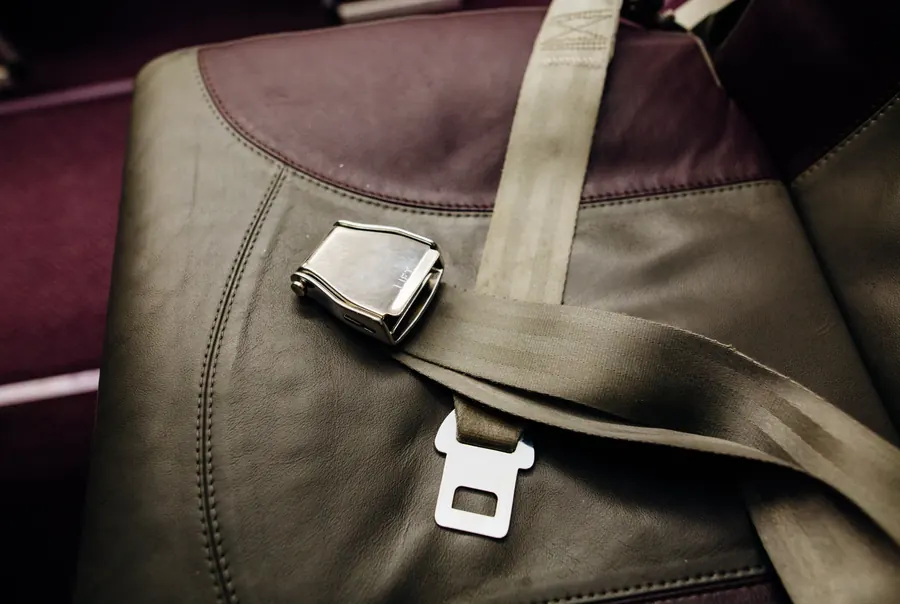
What decides whether a position uses a lap belt is the anchorage arrangement actually present at that position — not preference, and not what a neighbouring seat has.
Retractable arrangements
A retractable assembly holds its webbing on a spool inside a retractor housing. Webbing pays out as the occupant draws the belt across the body and is drawn back in when released, so the belt sits close without anyone setting a length.
Because the retractor is a physical unit that has to mount somewhere, converting a manually adjusted position to a retractable one is a question about the vehicle rather than about the belt. That has to be established at the vehicle by a qualified automotive technician.
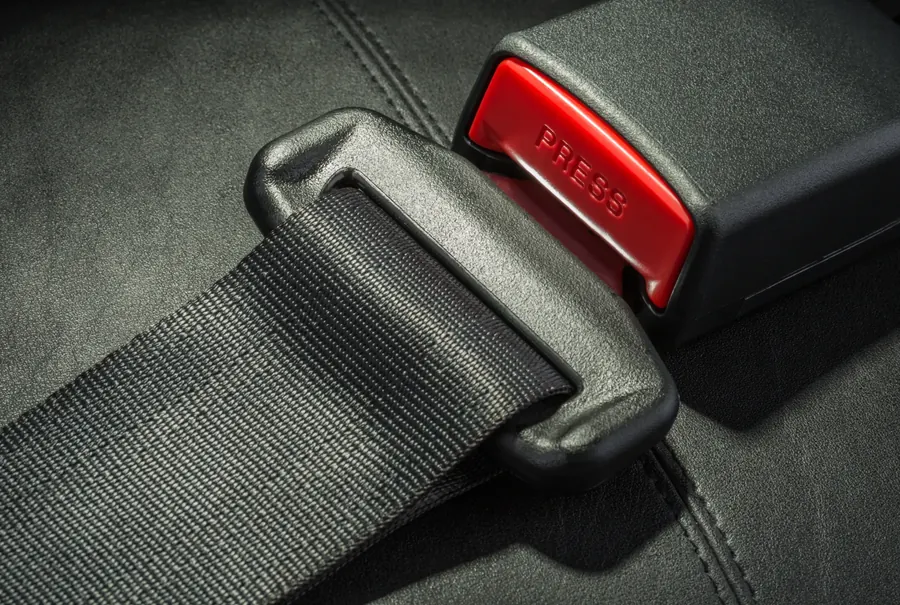
One thing to avoid opening
Retractor internals are under spring tension and are not user-serviceable. Slow, noisy or incomplete retraction is a reason for inspection by a qualified automotive technician, not for investigation with a screwdriver.
Side by side
| Attachment points | Three-point: three, including an upper anchorage. Lap: two, one either side. |
|---|---|
| Torso restraint | Three-point: yes, via the diagonal section. Lap: no. |
| Length management | Retractable: automatic, via a spool. Manual: set by an adjuster on the webbing. |
| Typical positions | Three-point: front and rear outboard. Lap: rear centre, bench seating. |
| Handing | Three-point: always handed. Lap: depends on anchorage arrangement. |
| Interchangeable? | No. Use the arrangement the seating position is built for, confirmed at the vehicle. |
Which one do you have?
Look at the position rather than the vehicle. Does the webbing cross the chest as well as the lap? If yes, it is a three-point arrangement. Release the belt — does the webbing pull itself back in? If yes, it is retractable. Is there an adjuster on the webbing that you slide to set length? If yes, it is manually adjusted.
Those three observations, plus which side of the cabin the position is on, are most of what an enquiry needs. Add photographs and you have the rest. The next guide turns this into a selection sequence.